Share this article
Healing the Earth: What is Regenerative Agriculture?
While sustainable farming aims to keep things as they are, Regenerative Agriculture aims to make things better. It is a philosophy of farming that heals the soil, increases biodiversity, and improves the water cycle.
1. Minimal Soil Disturbance Plowing breaks the complex fungal networks in the soil. Regenerative farmers use "No-Till" methods to keep the soil structure intact, which naturally increases its ability to hold water.
2. Soil Armor Leaving crop residue on the ground or planting cover crops ensures that the soil is never bare. This protects it from the scorching Indian sun and prevents the wind from blowing away fertile topsoil.
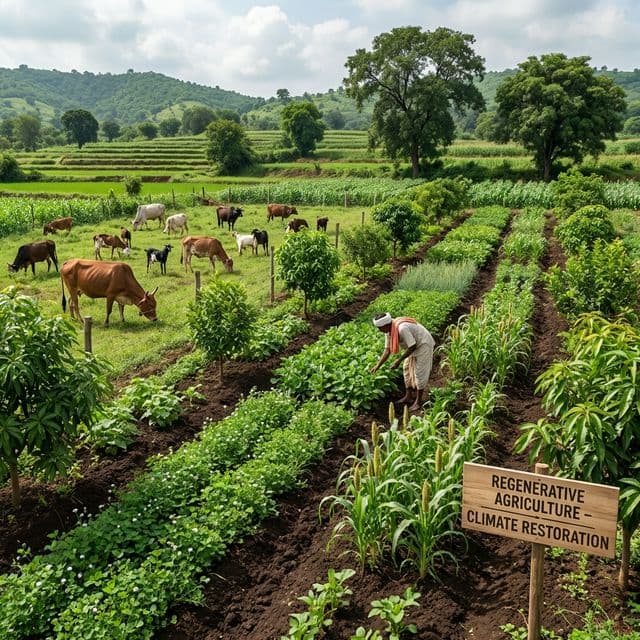
3. Integration of Livestock Intelligent integration of grazing animals helps fertilize the soil naturally. Managed grazing encourages grass growth and pumps carbon deep into the earth.
4. Why It Matters for Small Farmers - Zero Input Farming: Over time, you need zero chemical fertilizers or pesticides. - Climate Change Shield: Regenerative farms are much more resilient to floods and droughts because the soil acts like a giant sponge. - Healthier Food: Crops grown in living soil have higher concentrations of vitamins and minerals.
Conclusion Regenerative agriculture is how our ancestors farmed for thousands of years, updated with modern understanding. It’s not just about what you take from the land, but what you give back to it.
K
Written by KhetiSetu Agri-Expert
Agricultural expert and content creator dedicated to empowering farmers with knowledge and modern techniques.